A brief outline of what we saw and the people who took us.
Pyramids
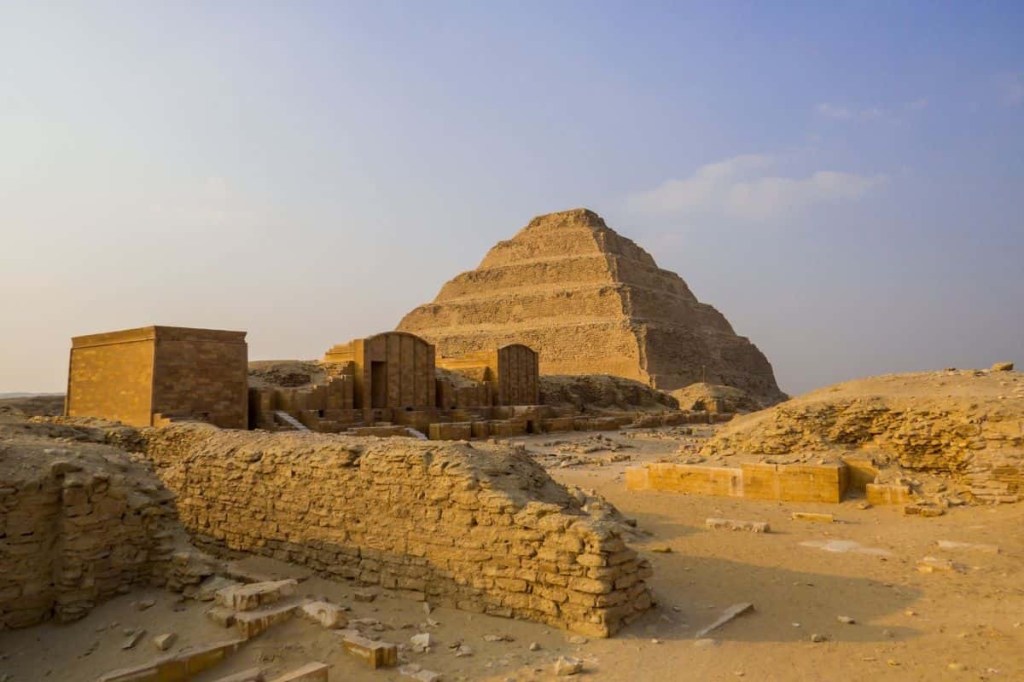
Egypt is liberally sprinkled with pyramids, and since I already talked about the Giza ones, we’ll move on to Saqqarah and Dashur, places an hour or so from Cairo that are actually much more interesting than Giza. While the pyramids themselves look a little more scuzzy (they are older, after all), the crowds are only an eighth of what they are in the city, so you can actually soak up the history. In fact, one pyramid we were in was so empty I was able to take my leggings off before I keeled over from heat stroke. As far as things to see inside, there’s really not much. But the idea that you are chicken waddling around in the bowels of the oldest pyramid in the whole world feels very nice. Waddling being the key word here.
Bent Pyramid, built by King Sneferu, is the most difficult to enter, and some of the group opted out. The rest of us enjoyed a sweaty, squishy, stinky time, scrambling down seemingly endless “ladders”, climbing steps, and crawling through tight tunnels where we crashed our heads on the ceiling and got generally dirty.
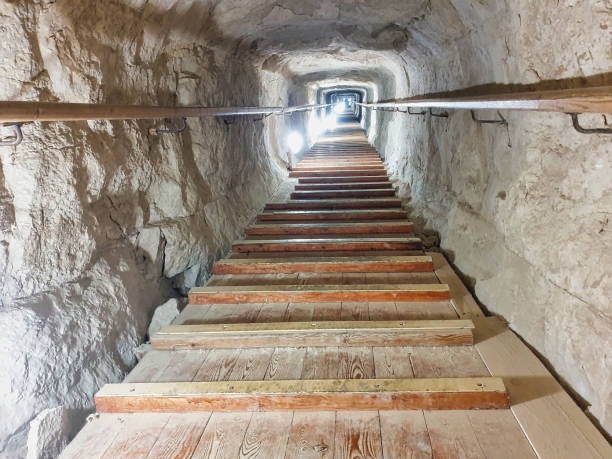
The handrail on the picture is a little lower than normal handrails, so you can see exactly how little room we had for our upper bodies. I actually had some stiff muscles the next day from the ridiculous position I had to go in. Jane and I were quite convinced we were under downtown Cairo by the time we reached the inner burial chamber.
These days all the treasures are out, and the bats have moved in, but we still gazed in wonder at the large empty chambers, and marveled at the mindset of the Kings in those days. The day they started ruling, they started in on their tombs. The longer they ruled, the more elaborate the tombs could be. There wasn’t much for decorations in these early tombs, but through the years Kings would add pictures depicting afterlife and all the sacrifices, gifts, and what have you’s they’d give to the gods, and pictures of how the gods were blessing them. It was actually sad, how they went to such drastic lengths for a pile of emptiness.
Valley of The Kings
This place always breathes mystery and intrigue to me. I know, I know, Golden Goblet and all that, but what if they DO discover something fabulous again, maybe even while I’m there. You’re never too old to dream.
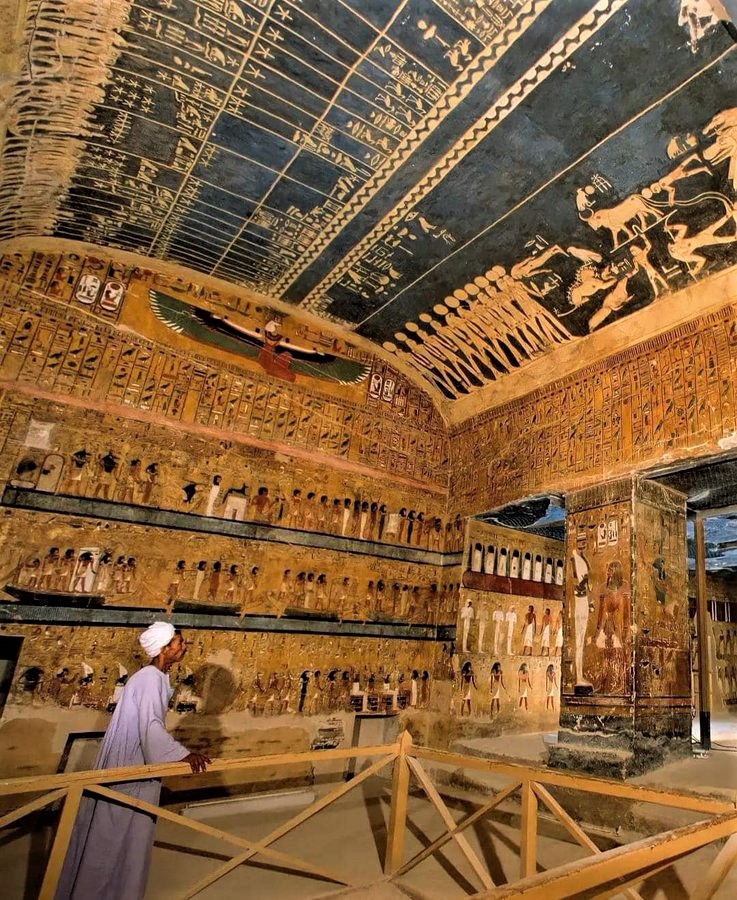
Located on the East Bank of the Nile, across from Luxor, the Valley of The Kings is where at least 64 tombs have been discovered dug into the mountains. The place itself looks inauspicious, just some barren mountains, but when you start walking around, you soon see little wooden entrances to tombs going into the hills. Bear in mind that you may not see them at all if they’re the famous ones, because the whole area around them will be shoulder to shoulder with tourists. Swarming masses of all nationalities. Everyone taking pictures, everyone being asked for a tip, everyone being told to MOVE ALONG. The entry ticket includes entrance to three tombs, but you can buy more. Since Heath and I had been there before, we bought seven tickets and explored some of the outer lying, less famous ones. They weren’t quite as astonishing, but they were interesting in that you could see exactly at what stage of construction the King had died. Carvings and paintings were at every stage of completion, some obviously hastily painted before they had time to properly smooth and prepare the walls or ceilings, no time for carvings. I suppose the artisan’s masters stood in the tombs and yelled “MOVE ALONG” every time they stopped to take a breather. It takes 70 days to mummify a body, so they had that much time to complete the task.
The Artisan’s Village is near the Valley, and you can see the ruins of the worker’s homes, a temple that is boring enough I quite literally can’t pull it up in my mind, and some more tombs. These tombs are very different, in that the scenes on the walls are not about the after life, but rather about daily activities. The colors were still quite vivid, and the pictures were intriguing.
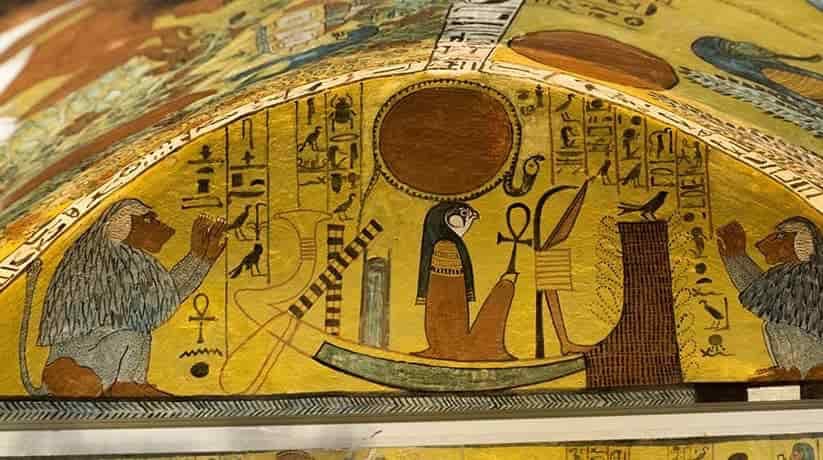
Temples
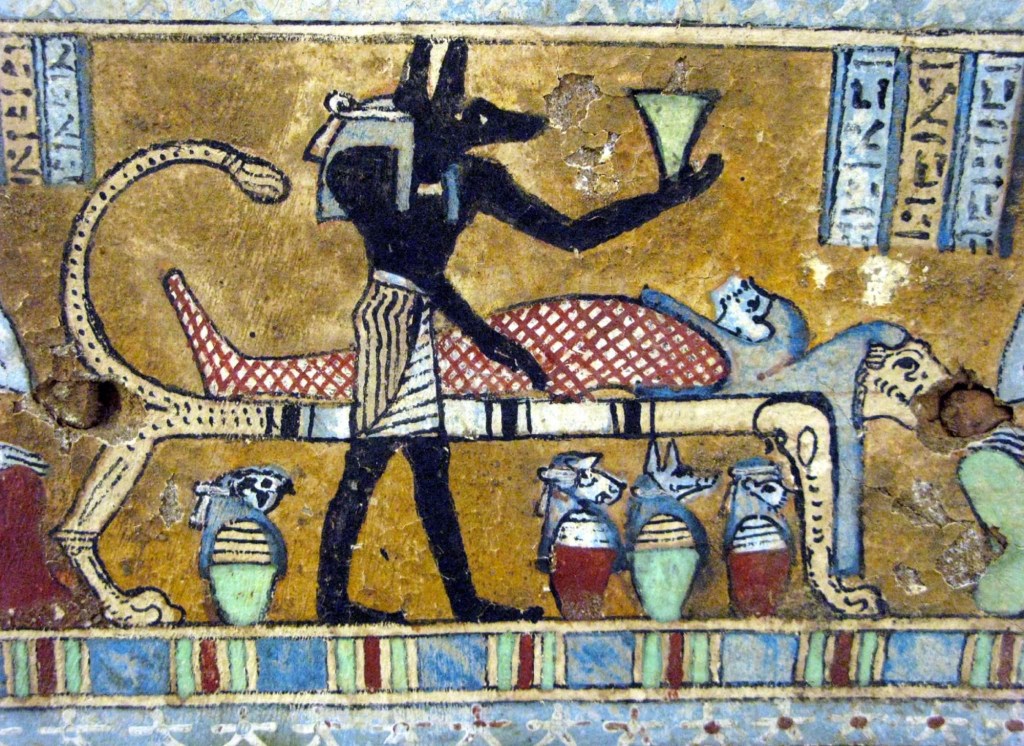
There are so very many temples to see in Egypt. Ancient structures that have been splendid, jaw dropping places of worship, where golden gods glittered in their holy spots, priests glided around in whispering robes and colorful images covered the walls as a permanent reminder that the After Life was coming and the gods must, at all costs be appeased. Other walls were used as political propaganda, with images of the current ruler killing hundreds of bearded enemies, or perhaps wearing the crown of a god, to show that he was indeed highly favored. The temples all spent centuries half buried under the relentless desert sand, some were used as shelters for Christians, when Saladin took over Egypt, or for soldiers, when Napoleon came through, and now they are being unearthed for us modern souls to look at and wonder. Most of the brilliant color has faded, but there’s just enough left to give you the vision of how amazing it could have been. Some had hard to access hidden chambers that we literally squished and wiggled our way into, and those areas were still astonishing in their preservation. No Christians had chipped away at the images, defacing the heathen gods. I don’t really blame them for doing it, but I do wish they hadn’t.
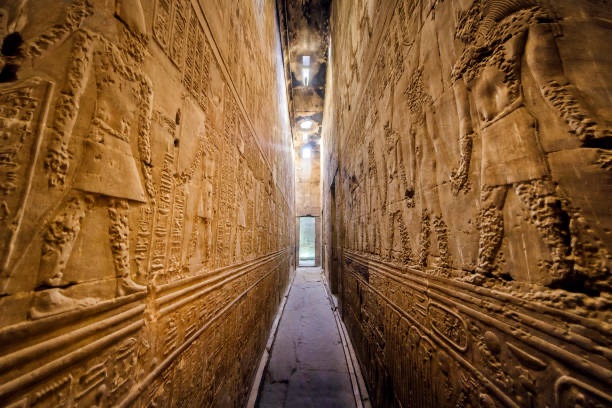
If you want to read details on exactly where we went and who built the temples and all that other important stuff, feel free to visit Annette’s Blog
Let it be known tho, that they were all very big and very old. As much as history interests me, I am not at all hard core, and often, when the guide was done explaining the good stuff and we were given leave to roam, I’d find myself a sunny spot to sit and just soak up the atmosphere itself. Forget the dates and names. Let’s feel this place. And now I have admitted just how shallow I am. Bummer.
Mt Sinai
There we were, a group of rebels, totally fed up with our leader and ready to go on a complete revolt and rush back to our homes by the Nile. Only this time, instead of having a leader walk us miraculously through the Sea, with a pillar of fire protectively behind, we were trapped in a van. Our leader was not Moses, but Salam, which ironically means “peace”.
The morning in Sharm el Sheikh had started early, with our driver showing up before 6am. He was accompanied by a representative of the Tourist Police and an energizer bunny named Salam, whose fat face was split by an enormous grin as he stood on the road and cried “shake hands, shake hands”! I shook, causing his grin to get even bigger, exposing the wide gaps between his bottom teeth. I tried to be friendly, but early morning isn’t my very best time, so felt rather subdued as I quickly hopped into the van. We all loaded up and rolled off, and that’s when the roaring commenced. Mile after agonizing mile of bellowed details about everything we were seeing and weren’t seeing. I know for a fact that I had by far the worst attitude, so don’t think poorly of the others. It was actually quite alarming to me how I almost instantly regressed to a seventh grader who snickered, rolled her eyes and then commenced to stare blankly out the window, switching between hot anger and great mirth. I was horribly embarrassed, but also felt almost incapable of acting the adult. Not the first time Sinai peninsula has seen such, if we read the Bible. Maybe it’s the desolate landscape, so rugged and removed from all things comfortable. “AND TO OUR LEFT….WE HAVE A BEEDWIN SCHOOL, YES? BEEDWIN CHILDREN PREFER TO NOT GO TO SCHOOL, SO THE ATTENDANCE IS VERY LOW. AND IF YOU LOOK TO THE RIGHT HAND, YOU WILL SEE A CULBERT. THIS IS A WATER CULBERT, TO SAVE THE TOWNS FROM HEAVY FLOODING, YES?” Regardless, when we popped out of the van at the halfway rest stop, some of us were in pretty bad shape. But were we allowed to cut and run silently in our own directions? No. We were cheerfully shouted over to a map on the wall and the whole political landscape of Sinai was described to us at top volume. That could have been interesting, but it just so happened that the map was located above a small table where two ladies had been having a peaceful breakfast. To say they looked uncomfortable is an understatement. I was in an agony of embarrassment. To suddenly be surrounded by people, and literally leaned over by the loudest speaker in history has to be jarring.
By the time we reached Mt Sinai, and THE HOLY BEAKS! IF YOU LOOK NOW, ON THE LEFT HAND, YOU CAN SEE THE HOLY BEAKS, three or so hours later, I had gathered my emotions into a much more manageable pack and could resignedly sit and listen to the story of Moses, and especially appreciated his version “AND THEN MOSES THREW DOWN HIS ROD, AND IT BECAME A SNACK”.
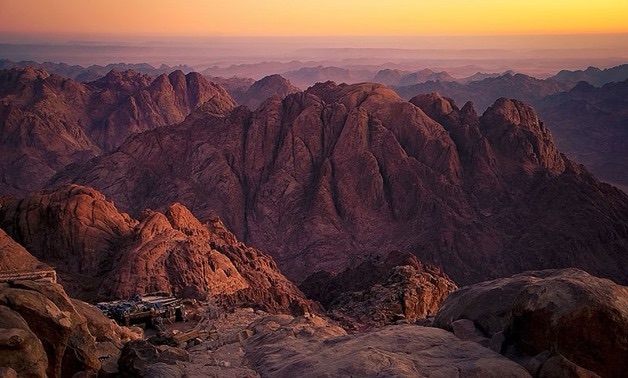
We spent some time in the monastery, looking at icons and stuff, but mostly we just wanted to hike. Eventually we were handed over to our Bedouin (Beedwin) guide named Mohammed, and finally, finally we were free. The weather was perfect, the trail mostly empty and most of all, it was quiet. Even the two or three or four hopeful camel drivers walked quietly behind us, and if I hadn’t been so hyper aware that a camels teeth were only a few inches from my neck, I would have hardly noticed them. And in the end they were a help, cause it got a little hard for some of us, so two of the girls hopped up on the camels and strolled like desert princesses up the slope. They still had to climb the 750 steps to the summit on their own two legs, while the camels waited at a rest stop. We ate lunch part way up, then proceeded to climb, drinking in the amazing views around us. It’s truly breathtaking , looking out over all that nothingness, and knowing the stories from the Bible happened there. Exactly there, who knows, but somewhere close anyway.
It was getting on towards evening as we descended, and some deer were leaping on the rocks. The herders were sprawled on the ground, visiting and resting, and the water closets were closed. Rats. We found more. But best of all, our guide had run out of steam and turned into a normal, amicable individual. In fact, I rather liked him by the end. Oh, he was full of hot air, but he also had been around the block and understood how Americans think a little. In fact, when the young whippersnapper of a guide told us the next day that us girls should take off our coverings to tour Cairo churches and mosques cause it would just be easier, I thought quite fondly how Salam would never have said that. He would have respected our religion and not worried one whit what others would think. Give me a year and I’ll be calling him my Sinai father.
And no, we didn’t listen to whippersnapper. We bought scarves instead to use in the mosques.
As far as our other guides and drivers, I’d say we struck gold. Well, there was the one driver who had an amazing smell, and a guide who, bless his heart, really needed gum, but all in all we liked them. They did an excellent job protecting us from too many beggars, finding us food when the pickings were thin, but most of all, they didn’t bring us to any of the typical tourist traps, such as the Alabaster Factory, the Textile Factory, the Papyrus Factory or the Essential Oil Factory, those places where you can watch the process and then feel lower than a worm if you don’t buy something.
I haven’t covered near all the places we went, but this is a lick. And it’s getting long, so it’s all you’ll get about that.
 It’s a Small World
Leave a comment