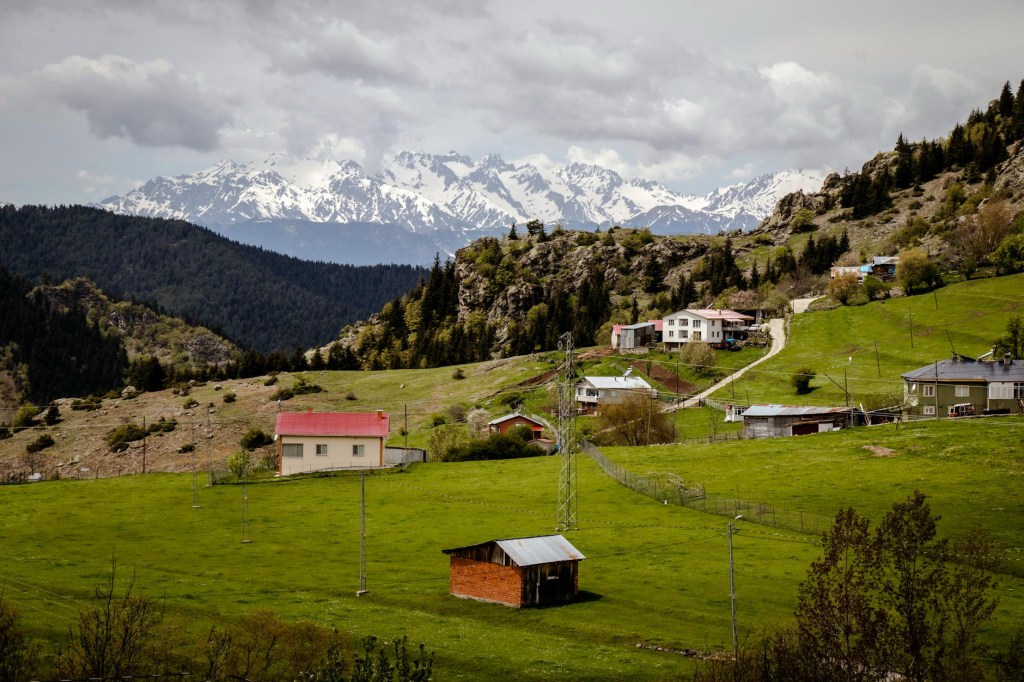
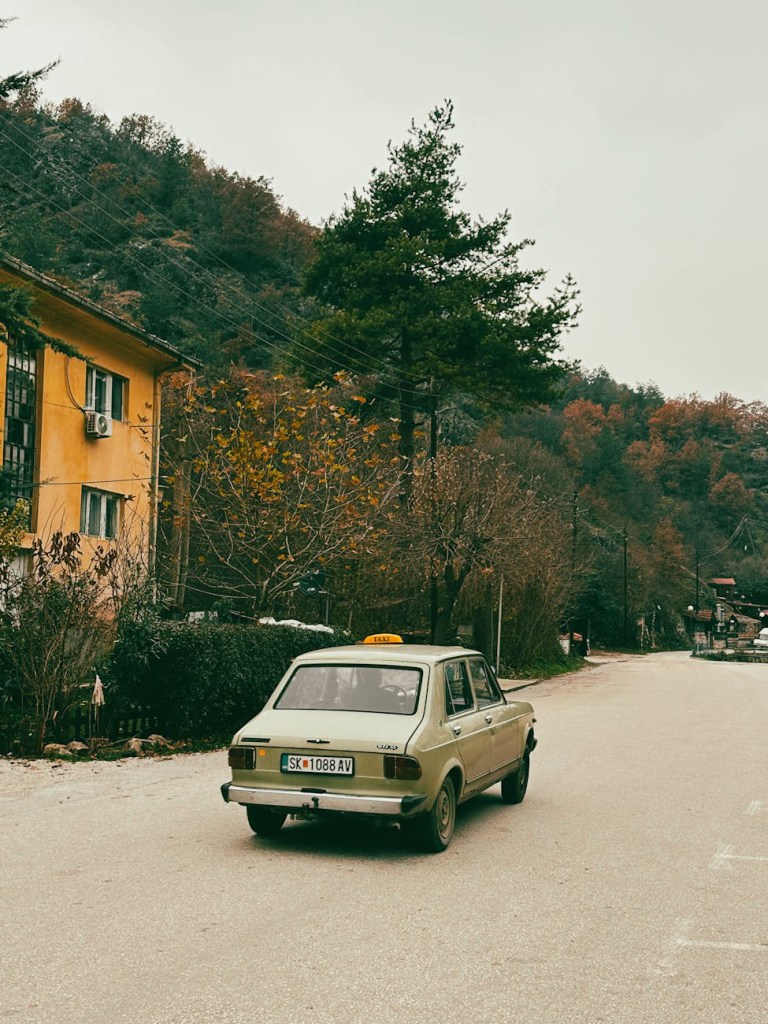
Wet, cold and just a tad miserable, Turkey is actually very beautiful when you get out of the maddening crowds and construction of Istanbul. It doesn’t take long after crossing the bridge over the Sea of Marmara and heading towards the Aegean Region that things start to look different. Acres and acres of vineyards stretch between the mountains. Orchards and olive groves abound. The women dress more in long skirts with kerchiefs tied under their chins. Modern cars are replaced with older, vintage models with weathered men behind the wheels. They are adorable, these cars, and often make me chuckle as they go rattling by.
Dogs are everywhere in Turkey. While cats rule Greece, dogs rule Turkey. They sleep on the roads, hang out in the olive groves, shop with you, reluctantly move out of your way when you need to enter a shop they are sleeping in front of, and positively love the archeological sites. These aren’t the scuzzy African style dogs that glide around in 1/2 wild packs, oh no. These are well loved dogs of every variety conceivable, but I would say leaning more towards the big fluffy mountain dog variety. You very often saw a group of tourists looking at some site and in the midst of them, flag-like tail wagging would be a grinning dog.
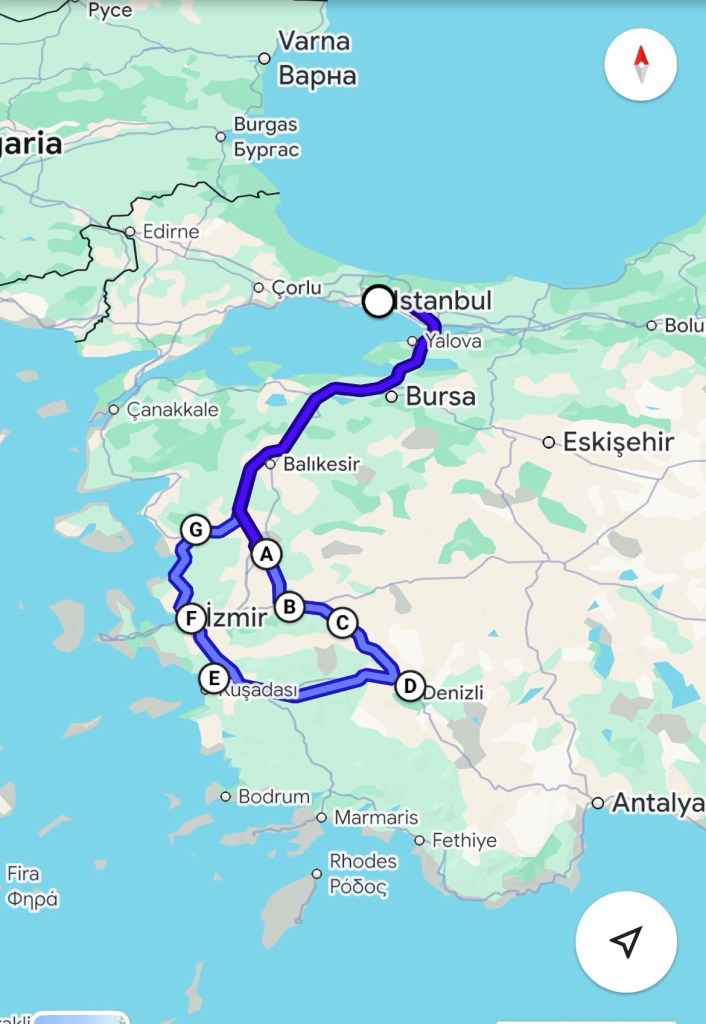
Heath had mapped all seven churches out in a two day itinerary, and as you can see they’re really not spread over a huge region. Total driving time was a little over 16 hours.
Thyatira
Just a quick stop in modern day Akhisar, the ruins here are pretty insignificant. A few pillars, a few foundation stones, but mostly just a look through the fence and you’re done.
Sardis
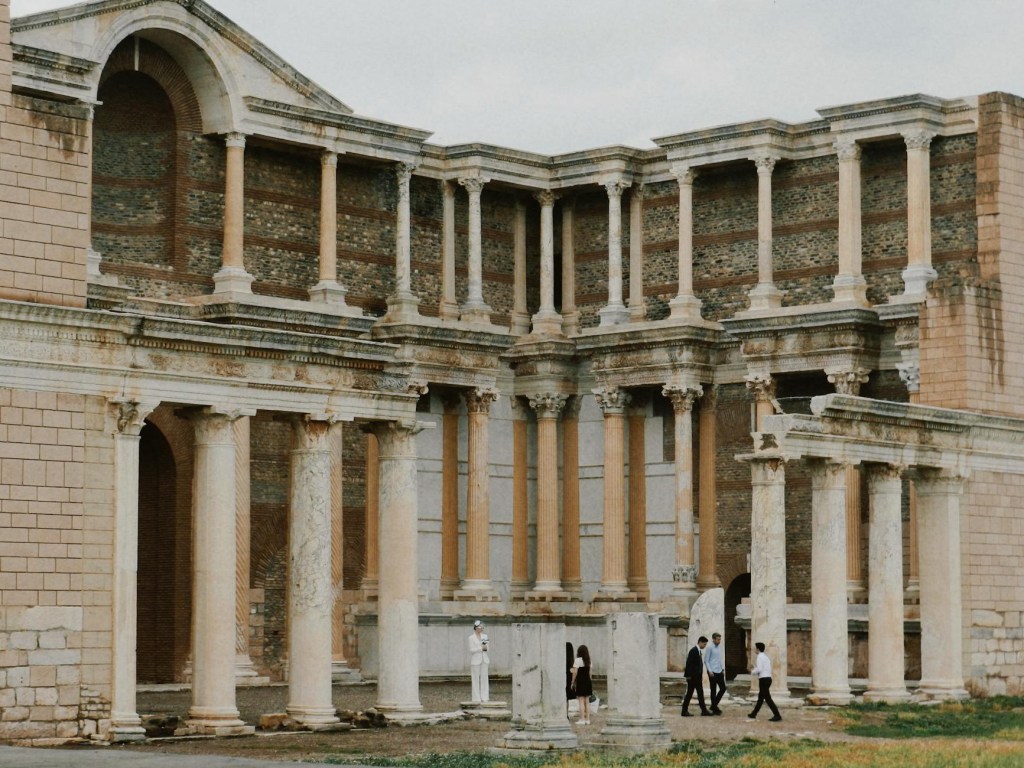
Sardis was actually a pretty cool site. Not covered by a modern town, they had done heaps of excavations here. They have also done some reconstruction and the gymnasium they are working on is truly fabulous. The city was completely destroyed by a massive earthquake in 17AD and they were still in the rebuilding phase when John’s letter arrived. According to some Bible scholars, the mention in the letter to Sardis where they are commanded to “Be watchful, and strengthen the things which remain, that are ready to die: for I have not found thy works perfect before God. [3] Remember therefore how thou hast received and heard, and hold fast, and repent. If therefore thou shalt not watch, I will come on thee as a thief, and thou shalt not know what hour I will come upon thee” may be reminiscent of the destructive earthquake. The earthquake struck in the night and many were killed. Allegedly there had been quite a few warning tremors, but they hadn’t taken them seriously.
Sardis was also famous for its gold refinery and was where coinage was invented. It was a tremendously up and coming place in its day.
Philadelphia
Another one of those little spots in the heart of a modern city where you can see some old stuff and call it good. Gated, old, the end.
Night found us in Denizli, or ancient Laodicea. I wrote earlier about our supper there… not a fond memory in some ways, but totally worth the agony jus lt for the experience. Denizli is also near Hieropolis (Pamukkale today), one of Laodicea’s sister cities. In Colossians 4:13, Paul mentions the church at Hieropolis. The area was once an great city and has huge natural hot springs that flow down a chalk colored hill. People flocked there to soak in the healing waters, and it’s fascinating walking around the ruins and seeing the apparently endless aqueducts running here and there. An absolute abundance of water that was piped everywhere.
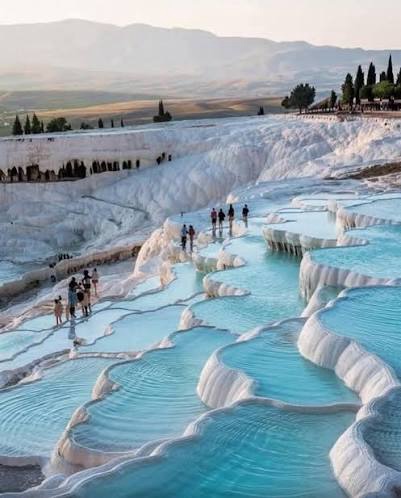
Today the hot springs are very controlled and while we could wade, no plunging was allowed. At first it wanted to bug me, but after tottering around on the slippery terraces, I could only imagine the total mayhem that could break out if several tour busses of excitable or infirm people were let loose with no restrictions. People would be skidding and tumbling everywhere! It also seemed to be a great spot to hang-glide, as they kept passing over us, obviously launched from the tall mountains next to the site. We had watched dozens of hot air balloons land as well, the sunrise tour over.
Laodicea
Remembered by me as the city of plumbing. Plumbing, plumbing and more plumbing. Ancient plumbing! Plumbing that was already getting old in 114AD. It’s fascinating to study up on Laodicea’s water system. The Romans built an inverted syphon system to bring water directly into the city fountains and bathes from a spring about 5 miles south. They used terracotta pipes held together with mortar. The water flowed into a reservoir high in the hills, was piped down through a valley and then up the other side into another holding tank before dispersing to the various fountains. Gravity built up pressure on the initial downhill section, giving the water enough pressure to climb the other side. The water had a seriously high mineral content, as can be clearly seen by looking at the pipes, and by the time it reached the city it was lukewarm from the sun and rather gritty. Another interesting link to the Revelations letter as it speaks to the Laodiceans about being lukewarm and spewed out. All stuff that will have created a real visual.
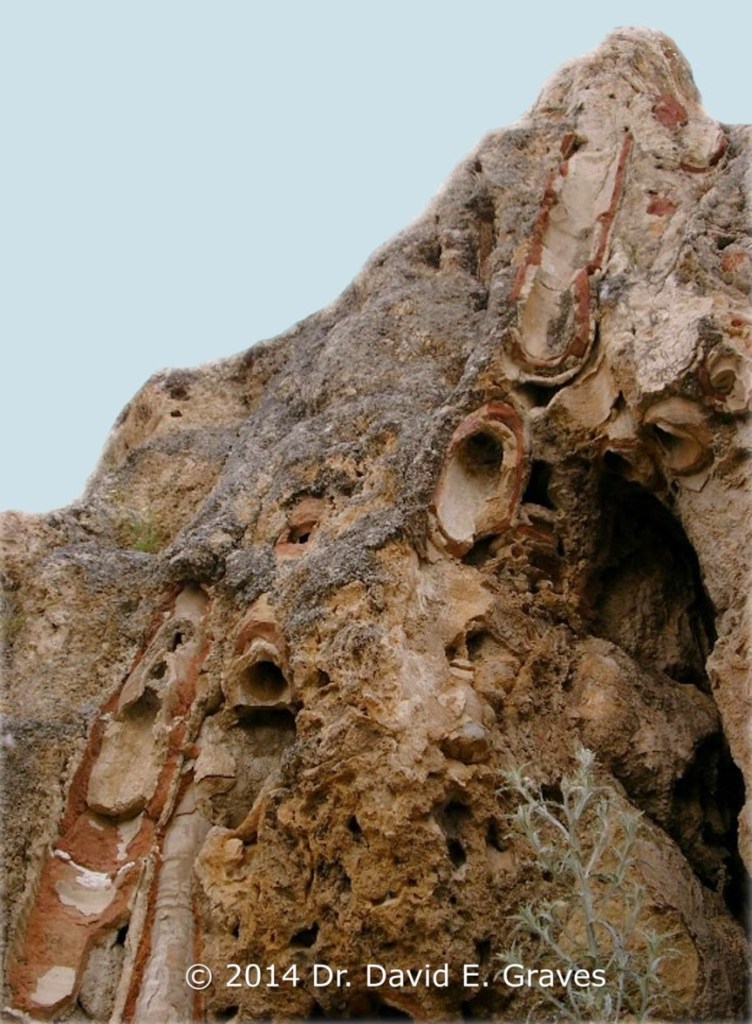
Note the calcified pipes in this picture. Although it’s hard to see properly, the whole hill is full of pipes. On every single side. Incidentally they also look alot like our supper from the night before…
Ephesus
Nestled in a little valley surrounded by tall mountains, Ephesus was a port town in Paul’s time. While not directly on the Aegean Sea, a small waterway ran inland to a port near the city. This has since silted full. It is to this port that the letters would have arrived, there to be taken on foot to all the churches. The letters in Revelations are written in the order they would have been delivered, with Ephesus the 1st one. The Isle of Patmos, where John was exhiled is not that far off shore, and if we had climbed a mountain and looked out to sea we would have seen Samos, one of our favorite islands from the first time we sailed the Aegean. The whole area is beautiful, and I don’t wonder why Paul spent so much time here. This was also Timothy’s church.
A lot has been done to excavate the ancient town, so while that makes it tremendously interesting, it also brings the crowds. We were not the only people visiting on this misty spring day, not by a long shot. We joined the masses and swarmed down the ancient road that lead from the port to city center. The same road from the Bible times, but hopefully it wasn’t quite as heaved and uneven in those days. I guess I’m a sewer rat, as sewers and plumbing interest me so much in all these ancient sites, but I was fascinated by the deep gutter running under the street with rock grating overtop. It would keep the street nice and dry in a rain and clean in spite of horses. If its like some of the gutters they’ve dug out in Israel, it would be deep enough to walk in. The road turned right at the theater referred to in Acts 19:29 and they rushed with one accord into the theater. That verse has always captured my imagination, and I was absolutely thrilled as I gazed up into the theater. You could almost hear the noise of the chanting and feel the unrest in the air.
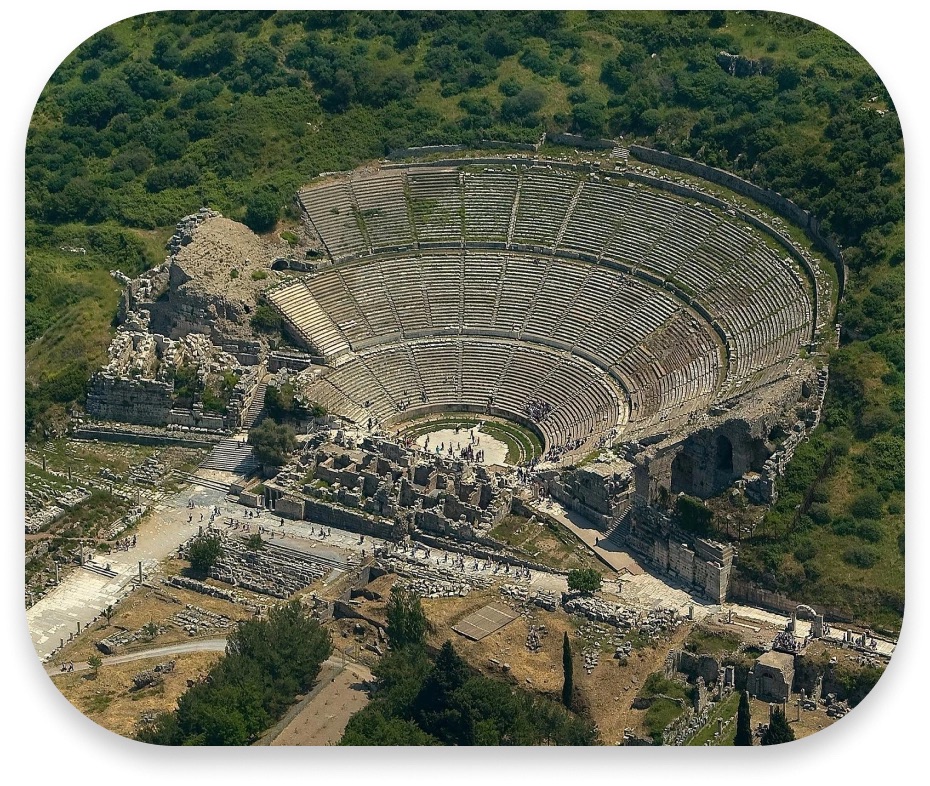
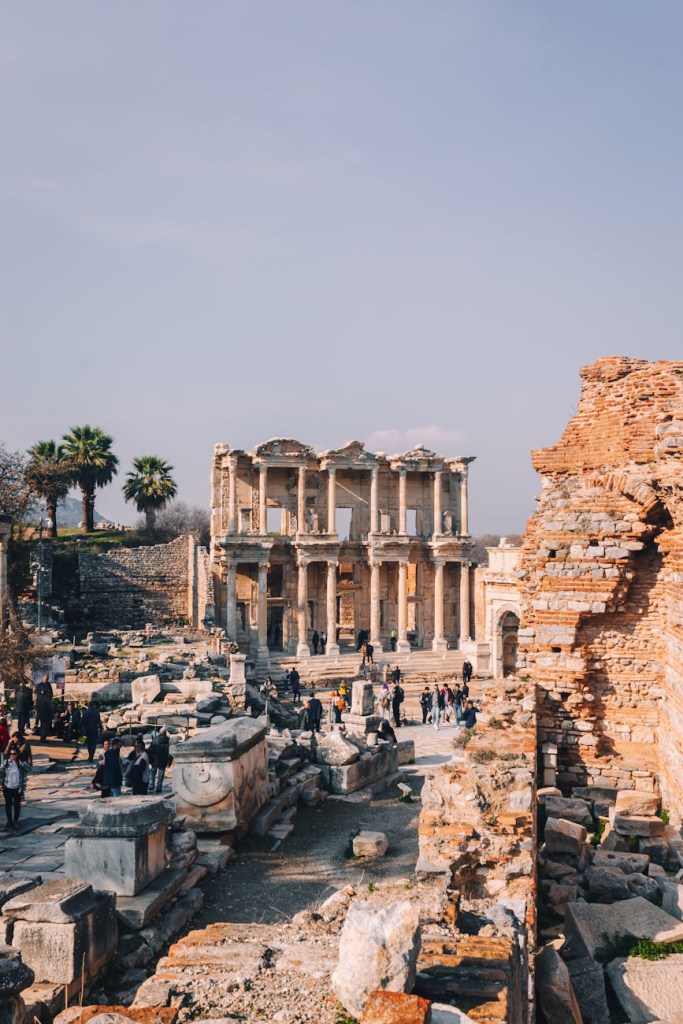
There are lots of ruins to explore, so we spent time just ambling around. Ephesus is also home to the Library of Celcus that was built in 110-120 AD. Some restoration has been done and it’s pretty impressive. The detail and work these builders went to is amazing.
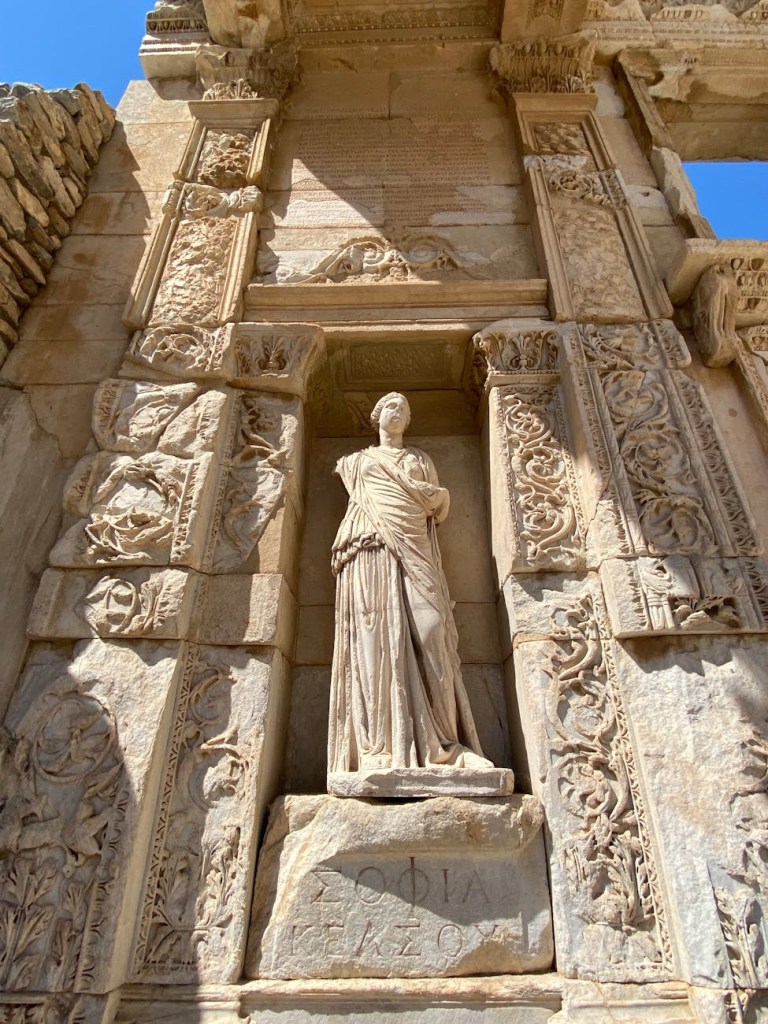
The Temple of Artemis, which is the Greek name for the Roman equivalent goddess Diana, is completely gone except for one pillar. While the name Diana is in the KJV, Artemis of the Ephesians was a very unique, local goddess. I say was, but perhaps I should say is. There is a museum on site called The Ephesus Experience where you led through this virtual experience that culminates in a room where the statue of Artemis is lit up among swirling fog. A disembodied voice talks about her greatness and how she protects the land and causes trees to bloom and wind to blow and baby bunnies to be born, or something. Regardless, it was creepy. I honestly didn’t feel comfortable looking at her, or really listening to the monologue. It seemed that Paul and Timothy would be rather horrified to see us standing there and hearing that. Maybe the whole history was just getting to me, but we all agreed it was weird and unsettling.
Smyrna
Smyrna. Modern day Izmir, right on the coast. What I recall of the site is wind. Cold wind. The need for toilets, but the only ones in sight were behind the pay booth to the teensy weensy park and we didn’t have the correct change to get in the gate. Cash only, please. No matter, we could see everything just by walking past. A huge pile of old pitas dumped for the stray cats right inside the fence. A massive turtle crawling through the ruins. The obligatory byzantine church ruins. And then across the street my eyes beheld a kokoreç stand and I was pulled as though by an invisible string across the lines of traffic to stare at it, shuddering and marveling.
It was a total crush of traffic and people in town and we had had a terrible time finding a parking spot. In our repeated circling sessions we had spotted a large outdoor market so we decided to trot off and explore it. We would have to choose the butcher/fish monger street to begin, and my horrified fascination only deepened as we strolled past raw bits and dangly’s of Kam the Lamb, fish of every description, including some beautiful little colorful things from the reefs (who even eats those!) scads of octopuses, tastefully and not so tastefully arranged, eels curled into buckets, squid by the dozen, you name it, we smelled it. None of us lasted too long. Markets are sorta fun and sorta not.
Late afternoon a storm system moved into the area and it started to steady rain. The wind howled and when we reached the hotel and opened the front door, it positively shrieked and moaned through the whole building. Our hotel was not fancy this time, but warm and welcoming and the shower was hot. In spite of the window being shut we still had a breeze in our room, but that was fine. At least it only made a dreadful noise when the main door opened downstairs, which was almost never. It was a little place and I only saw one other guest.
Pergamon
Sunshine! The storm had blown over in the night, thank goodness.
Pergamon is supposed to be an up and coming site, but somehow wasn’t. Maybe it was because it was Eid el Fitr, or Day of Feasting after Ramadan, but nothing was open. We drove our van up impossibly skinny and steep streets, sometimes having to shout encouragements to it so it would keep climbing and not spin out. Sometimes worked, sometimes took a few tries. But when we finally got to the gate, it was tightly padlocked. A fence in questionable condition seemed to circle the site and we half considered climbing it until we spotted the security camera. On second thought, maybe we would see if there was a different entrance. As we sat there brooding a very cheerful old couple came tramping up from their house somewhere, she carried a fresh pan of homemade baklava and he carried a large bundle of branches. Her kerchief was tied under her chin and their wrinkled faces broke into beams when they saw us. They waved and climbed into an ancient station wagon and three small girls ran up and jumped in the backseat. The car, despite its looks, roared right to life and they bounced off down the road, a beautiful picture of village life. Apparently on Eid el Fitr it is tradition to go out and have a picnic feast. I’m guessing that’s where they were off to.
We convinced Google maps to find a different entrance to Pergamon, but this one was also closed. It housed the cable car that allegedly brought visitors to the top of the hill where the old town sat. Honestly, it looked like it was rather out of the habit of going to the top or the bottom. Some person showed up and spoke enough English to tell us it wasn’t going and that was that. If it had been the 1st of the churches, we would have been real disappointed, but it was the 7th. We were frankly a little ruined out. By cranking our heads we could sort of see stuff on the hill, and if you just closed your mind to some of the things you had read you could see up there, well it really wasn’t too keen a disappointment not to actually walk on the site. Plus we saved a buck and every dollar we save, real or imagined, goes towards better suppers.
And so we turned back to Istanbul where we got stuck in impossible traffic for hours and hours. There is one main tunnel for all the traffic to flow under the Bosphorus River and I think there was a wreck in there. Whatever the case, we sat in the van and waited as did everyone else. Quality visiting time I guess. We had time to do a little looking at Topkapi Palace before heading back to our hotel and our early flight back to Greece.
 It’s a Small World
Leave a comment